
Intro
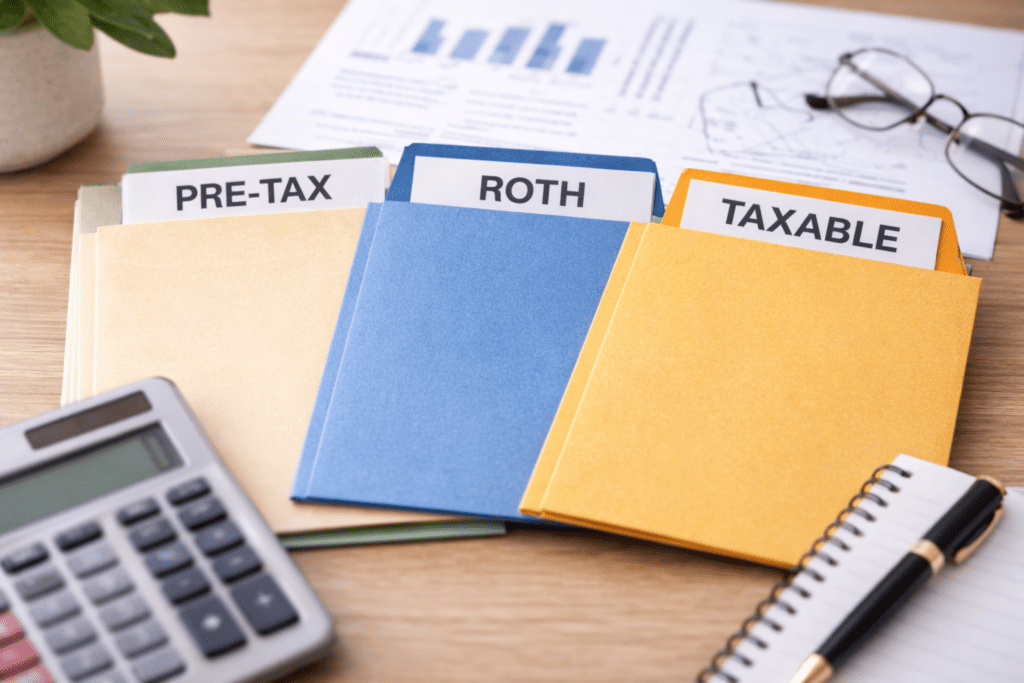
The Roth IRA was created in 1997 by the Taxpayer Relief Act to allow Americans to save with after-tax dollars, with the incentive that qualified withdrawals, including both contributions and investment earnings, would be distributed tax-free. The after-tax option also enabled the government to collect tax upfront rather than defer it. Up until that point, most retirement savings were pre-tax money. We often assume our tax rates will go down in retirement because our income is lower; however, there are several reasons to consider a Roth conversion as part of your retirement strategy.
Benefits
What are the benefits?
- Hedging against a rising tax rate environment
The highest federal tax bracket in US history was 94% in 1944 during World War II. The highest federal tax rate today is 37%. We live in an unprecedentedly low-tax-rate environment. By proactively paying taxes today, you can hedge against a rising tax rate environment in your retirement. - No Required Minimum Distributions (RMDs)
Unlike traditional IRAs and 401(k)s, Roth IRAs have no RMDs for the account owner, offering more control and flexibility over your withdrawals and letting assets grow longer if not needed. - Tax Diversification
You diversify across various asset classes, such as stocks, bonds, and real estate, to reduce risk. In the same way, holding assets in a variety of tax classes can allow you to diversify the risk of taxes in your retirement. - Paying Taxes Now, Not Later
By converting to a Roth IRA, you pay taxes on the converted amounts now, rather than waiting until retirement when required minimum distributions (RMDs) might push you into higher tax brackets. This is especially valuable if you expect your income or tax rates to increase in the future. - Tax-Free Growth and Withdrawals
Money in a Roth IRA grows tax-free, and upon reaching age 59½ and meeting the five-year rule, withdrawals are tax-free. This reduces your taxable income during retirement, preserving more spending power. - Reducing Taxes on Social Security and Medicare
Lower taxable income in retirement (thanks to Roth withdrawals) can reduce how much of your Social Security is taxed and may help keep premiums for Medicare Parts B and D lower. - Estate Planning Advantages
Roth IRAs are attractive for inheritance purposes, as heirs can receive distributions tax-free, and beneficiaries can continue to benefit from tax-free growth over their lifetimes. - Tax Diversification and Strategic Flexibility
Roth conversions offer a way to diversify your tax situation in retirement. By having both traditional and Roth accounts, you can strategically choose which assets to withdraw from each year to manage your overall tax liability. This can be especially crucial if tax laws change or your personal financial circumstances shift.

What to Avoid
Here are some tripwires to avoid when converting money to a Roth
- Tax underpayment penalties
Make sure you’ve paid enough taxes throughout the year via estimated tax payments and/or withholdings to avoid penalties. - 5-year holding period rule
Regardless of age, there is a 5-year holding period for all new Roth contributions and conversions. If you are over the age of 59 ½, you can draw your principal out from the original amount converted, but if you draw earnings out, then taxes could apply. If you are under the age of 59 1/2, you can draw the principal from your Roth out penalty-free; however, any earnings that are drawn out prior to 59 ½ could be subject to taxes and penalties. - Paying taxes with cash on hand
It is most beneficial when you have the cash on hand to pay for the taxes owed when you make a Roth conversion. If you have to withhold for taxes via the principal amount you convert, this decreases the value of a Roth conversion because you are reducing the total principal that is converted from pre-tax to Roth in the process. - Inherited IRA rules apply
Anyone who inherits an IRA from someone who dies after December 31, 2019, has a 10-year period after the death to withdraw the entire amount from the IRA. This rule applies regardless of whether the money is Traditional or Roth. The distributions will not be taxed to the Roth beneficiary, but they are still subject to RMDs and the 10-year distribution rule. - Reporting the Roth conversion correctly on your tax return
Form 8606 is often missed or filed incorrectly by individuals who have completed a Roth conversion. The IRS requires Form 8606 to be filed in order to properly report a Roth conversion, including the gross conversion amount, as well as any after-tax basis that may reduce the “taxable” portion of the conversion. A tax professional can assist with this filing.
Conclusion
A well-diversified tax approach can help you manage your taxes in your retirement. A Roth conversion offers tax management, withdrawal flexibility, reduced retirement income taxation, and improved legacy outcomes, all of which can contribute to a more secure and efficient retirement plan.Your retirement has many variables and tripwires, and there is no crystal ball to show us what tax laws will change next, and when. We can only control and influence our actions today, and we know we are in an unprecedentedly low tax-bracket environment, which is why we think it is prudent to consider a Roth conversion as part of your retirement strategy.
We want you to Retire With a Purpose!
The Vocare Wealth Advisor Team
The foregoing information has been obtained from sources considered to be reliable, but we do not guarantee that it is accurate or complete, it is not a statement of all available data necessary for making an investment decision, and it does not constitute a recommendation. Any opinions are those of Vocare Wealth Advisors and not necessarily those of Raymond James.
Raymond James and its advisors do not offer tax or legal advice. You should discuss any tax or legal matters with the appropriate professional.
Every investor’s situation is unique, and you should consider your investment goals, risk tolerance and time horizon before making any investment. Prior to making an investment decision, please consult with your financial advisor about your individual situation.